
Intimacy exercises for couples work but only when chosen for the right stage of disconnection and practiced consistently enough to shift the nervous system’s baseline. This guide draws on clinical experience with married couples. Each exercise comes with a reason: why it works, what it targets, and when self-directed practice needs to give way to professional support.
Why Intimacy Exercises for Couples Actually Work
Intimacy in a long-term marriage is not maintained automatically; it requires deliberate, repeated action. Sustained physical touch releases oxytocin, the primary bonding hormone. Synchronized breathing activates the parasympathetic nervous system, creating physiological attunement. Prolonged eye contact produces measurable emotional closeness. These are biological processes, not metaphors. The awkwardness most couples feel when starting exercises is normal and documented to resolve with repetition as the nervous system recalibrates from distance toward connection.
Emotional Intimacy Exercises for Married Couples: Rebuilding Your Shared Inner World
The daily check-in: three minutes each, not logistics, but internal state, what you’re carrying, what you’re noticing. Structured disclosure questions derived from Arthur Aron’s research use reciprocal vulnerability to deepen closeness. The appreciation ritual: naming one specific observed behavior daily, not a compliment, but a noticing. Emotional exercises must precede physical ones. Emotional safety is the substrate on which physical closeness is rebuilt.
Physical Intimacy in a Marriage: Four Exercises to Rebuild Touch and Closeness
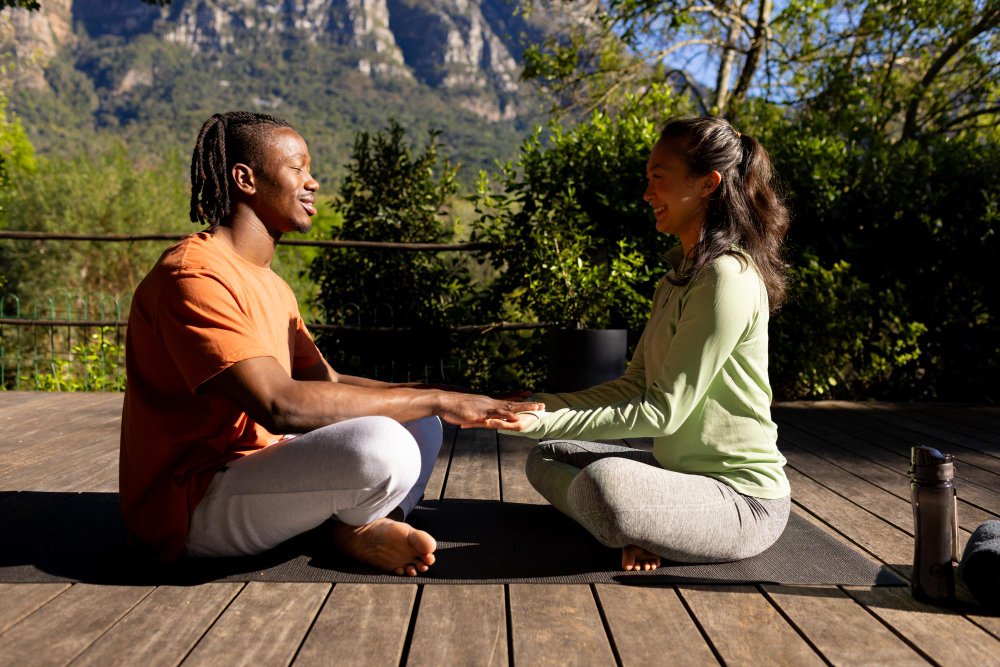
The twenty-second hug shifts the nervous system from stress to connection. Oxytocin release requires sustained contact. Synchronized breathing: sit facing each other, match breath for two to three minutes, creating physiological attunement. Sensate focus, developed by Masters and Johnson, uses structured touch with no goal beyond presence. Eye gazing for two to five minutes produces vulnerability and the felt experience of being seen.
Intimacy Exercises for Couples Who Have Grown Distant Over Years
When years of distance accumulate, the nervous system adapts, and distance becomes the baseline. Exercises that feel natural for connected couples feel foreign for this group. Starting with physical touch before emotional safety is rebuilt typically fails. The graduated approach: begin with the lowest-vulnerability exercises and build as safety increases. Shared memory exercises, revisiting a positive experience in sensory detail, access emotional foundation without requiring current vulnerability.
Building Intimacy in a Marriage Through Shared Rituals and Future Vision
Research consistently shows that couples who maintain small, consistent rituals of connection tend to report stronger relationship satisfaction over time through accumulated bids for connection and positive responses. The future vision letter: each partner writes independently about the relationship they hope for in five years, then reads aloud, creating alignment and revealing unspoken hopes. Morning and evening rituals create daily turning-toward moments that build felt security through reliability.
How to Improve Intimacy in a Marriage When Communication Has Broken Down
The I-feel / when / I-need structure replaces blame-framed communication with need-framed communication, reducing defensive shutdown. The Speaker-Listener exercise, one partner speaks uninterrupted while the other paraphrases before responding, slows interaction below the reactivity threshold. Expanding emotional vocabulary together builds the shared language intimacy required. Clinical research suggests that the ability to make and receive bids for connection during non-conflict moments may be a stronger predictor of relationship health than conflict resolution skill alone.

Why Intimacy Exercises Fail and What That Tells You
Intimacy exercises require a baseline of emotional safety. When resentment dominates, exercises feel hollow or create new conflict. The most common failure: attempting physical reconnection before emotional safety is established. Consistent disengagement is usually emotional exhaustion or a belief that nothing will change, not resistance. When exercises have been genuinely attempted for multiple weeks and consistently fail, the emotional environment required for self-directed practice is not yet present.
When Intimacy Exercises Need a Therapist in the Room: What Our Retreat Provides
Andrew Sofin is a licensed couples and family practitioner with 25+ years of experience, president of CACFT, and visiting professor at the University of Guelph. For couples who have lost emotional safety, practice needs to happen inside a guided clinical relationship, not at home. The retreat creates what self-directed practice cannot: a removed environment, uninterrupted therapeutic time, and a clinician observing and adjusting in real time.
Rekindling Intimacy in a Marriage: What to Expect in the First Four Weeks
Weeks one and two: exercises feel effortful, possibly awkward, as the nervous system responds to unfamiliar closeness. Week three: most couples report the first moment of genuine spontaneous connection. Week four: consistency becomes more natural, and the emotional environment shifts. The most important instruction: do not evaluate after one attempt; commit to four weeks before assessing whether the practice is working.
Intimacy Activities for Couples: Building the Daily Practice That Sustains Connection
Intimacy maintenance differs from repair repair requires sustained exercises; maintenance requires small daily choices. Research in couples therapy suggests that a higher ratio of positive to negative interactions is achieved through micro-moments, not grand gestures. Practical daily habits: a genuine arrival greeting, a two-minute check-in before sleep, and non-goal-directed physical contact. Couples who sustain these habits consistently rarely need crisis intervention. When couples reach that maintenance stage consistently, it signals the work is succeeding.
How to Improve Intimacy in a Marriage When Only One Partner Is Motivated
Unequal motivation is the norm, not the exception. The motivated partner’s most common error is increasing effort, which tends to increase the other’s withdrawal. The most effective move is reducing pressure, creating a low-stakes environment where engagement feels optional. Starting with the lowest-vulnerability exercises lowers the threshold. Individual reflection by the motivated partner often shifts the dynamic without requiring anything from the other.
Conclusion
Intimacy exercises for couples work when chosen for the right stage, practiced with consistency, and supported by a baseline of emotional safety. Sequence matters: emotional safety first, physical reconnection second. Small, daily, repeated choices to turn toward each other are more powerful than periodic intensive efforts. For couples where self-directed practice has been genuinely attempted and stalled, the right next step is clinical support in an environment designed to build the conditions exercises need.

Frequently Asked Questions
What are the best intimacy exercises for married couples?
The most effective exercises are sequenced correctly: emotional before physical, lowest-vulnerability entry points before higher ones. Top emotional exercises: daily check-in, Aron-derived structured disclosure questions, and appreciation ritual. Top physical exercises: the twenty-second hug, synchronized breathing, sensate focus non-sexual stage, and eye gazing. The best exercise for any couple is the one they will practice consistently, choose based on current comfort, not ideal outcome, and build from there.
How often should couples do intimacy exercises?
For couples in active rebuilding: daily micro-exercises plus one longer practice two to three times per week. Research is consistent: five minutes daily outperforms sixty minutes once a week. Frequency should be sustainable, not aspirational. One exercise per day, building gradually, is more effective than a demanding full practice abandoned after two weeks. Expect the first four weeks to feel like effort. Most couples report exercises becoming habitual after that threshold.
Can intimacy exercises fix intimacy issues in a marriage?
For early to moderate disconnection: yes, consistently practiced exercises produce measurable improvement in emotional closeness, physical comfort, and relationship satisfaction. For entrenched disconnection, where resentment or emotional withdrawal is significant, exercises alone are typically insufficient; they need to be practiced within a guided clinical relationship in which underlying patterns are addressed simultaneously. Exercises are tools, not cures. They work when the conditions for connection are present or are actively built alongside them.
What is the difference between an intimacy exercise and couples therapy?
Intimacy exercises are structured practices couples do independently to build or rebuild the connection. They work when emotional safety is present. Couples therapy provides a guided clinical environment in which exercises are practiced with professional observation, adjustment, and support, particularly important when self-directed practice stalls. The two are not competing: exercises done at home complement sessions. An intensive retreat combines both, creating conditions neither self-directed practice nor weekly sessions alone can fully replicate.
Why do I feel awkward doing intimacy exercises with my partner?
Awkwardness is normal and clinically documented as the nervous system’s response to unfamiliar closeness after distance. When distance has been the baseline, intimacy reads as unusual, producing self-consciousness. This resolves with repetition: by the third or fourth attempt, exercises that felt forced begin to feel natural. If awkwardness consistently escalates into conflict or one partner shuts down, that signals a need for clinical support rather than independent continuation.
How long does it take to rebuild intimacy in a marriage?
Timeline depends on how long the disconnection has been present and on the chosen intervention format. For couples practicing consistently at a moderate distance, meaningful improvement is typically observable within four to six weeks. For years of entrenched distance, the process is longer, but with professional support, the pace is meaningfully faster. The strongest predictor of timeline is consistency: small daily exercises produce faster and more sustained progress than periodic intensive efforts.