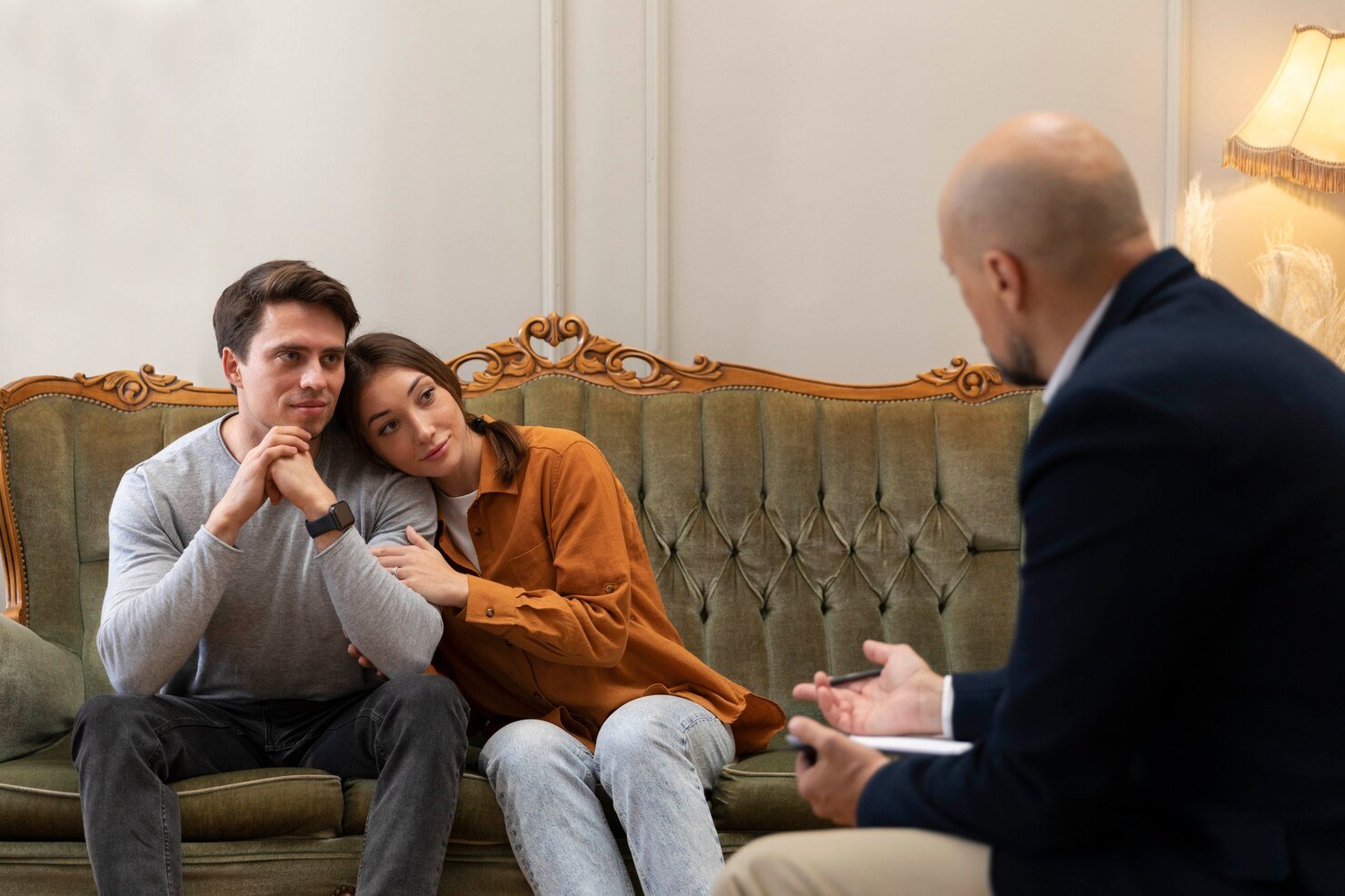

Marriage counseling vs. couples therapy, most people searching this question assume they are two different things; however, the majority of therapists use the terms interchangeably. The real question is not what the labels mean but which approach, depth, and format matches what your relationship actually needs at the moment.
Why These Terms Cause Confusion
No licensing board distinguishes marriage counselors from couples therapists. Any licensed therapist can use either label, and most do so based on marketing preference rather than clinical distinction. The confusion reflects the reality that the profession itself treats the terms as interchangeable. What actually differentiates the help you receive is the clinical model and the depth of the approach, not the name on the door. Understanding this reframes the decision in a more useful direction.
What Marriage Counseling Focuses On
Marriage counseling typically addresses present-day challenges: communication breakdowns, conflict over finances, parenting disagreements, or rebuilding after a specific event. It is generally shorter-term and structured around a defined goal. It does not require excavating emotional history and focuses on practical tools couples can apply between sessions. It is also used proactively before difficulties escalate, including premarital counseling for partners preparing for long-term commitment. The focus is practical, clearly bounded, and consistently forward-looking in its orientation.
What Couples Therapy Focuses On
Couples therapy addresses the underlying emotional patterns and attachment dynamics that drive recurring conflict — not just the presenting symptom but the relational system producing it. It typically runs longer than counseling and involves exploration of relationship history and individual emotional responses. It is appropriate for couples experiencing persistent cycles of disconnection, significant breaches of trust, or patterns that have resisted simpler interventions. The goal is structural change, not surface adjustment. Depth is the factor.

Marriage Counseling vs. Couples Therapy
Marriage counseling is typically shorter, present-focused, and goal-oriented. Couples therapy is typically longer, emotionally deeper, and pattern-focused. Marriage counseling is historically associated with married partners; couples therapy is used for any committed relationship regardless of legal status. Both formats can use the same evidence-based models — the difference lies in depth of application. The clinical model the therapist uses and their specialization in couples work determines more about outcomes than the label on the listing.
Signs You May Need Counseling vs Therapy
Counseling fits well when the relationship is fundamentally stable but facing a specific, bounded challenge. Therapy is indicated when conflict has become entrenched, emotional safety has eroded, trust has been seriously broken, or when the couple has already tried counseling without adequate improvement. The severity and duration of the problem is a stronger guide than either label. Couples cycling through the same arguments for years, or feeling emotionally disconnected, are typically beyond what short-term counseling addresses.
Why Therapist Training Matters More Than the Label
A licensed therapist who specializes exclusively in couples work and uses a structured evidence-based model will produce better outcomes than a generalist offering the same label. The most meaningful question is not counseling or therapy but what clinical model does this practitioner use and how deep is their experience with couples specifically. Looking for training in Emotionally Focused Therapy, the Gottman Method, or a comparable framework narrows the field to practitioners where outcomes are measurably stronger.
When the Terms Are Used Interchangeably
In most modern clinical settings, marriage counseling and couples therapy refer to the same professional service and are treated as synonyms. A therapist listing marriage counseling and another listing couples therapy may offer virtually identical services. The distinction that existed in earlier decades, counseling as short-term and practical, therapy as deep and long-term, has blurred considerably in contemporary practice. What now differentiates them is clinical approach, depth of model application, and the individual clinician’s specialization.

Couples Retreat: When Labels Don’t Fit
For couples whose distress is acute, whose schedules make weekly sessions impractical, or who tried conventional formats without adequate progress, the marriage counseling vs. couples therapy distinction stops being useful. Couples Retreat, led by Andrew Sofin, a licensed couples and family practitioner with 25 or more years of clinical experience, visiting professor at the University of Guelph, and president of CACFT, offers a multi-day intensive where evidence-based work happens in one block.
How Long Each Format Typically Takes
Marriage counseling typically runs 8 to 12 sessions for a bounded issue. Couples therapy using evidence-based models typically requires 12 to 20 sessions for meaningful deep-pattern change. Both formats assume weekly or biweekly sessions in a standard outpatient structure. Intensive formats compress multiple sessions into one or several consecutive days, achieving comparable clinical depth in a fraction of the calendar time. Couples with limited availability or high urgency will often find the intensive format considerably more practical.
What to Expect in the First Few Sessions
In most formats, the first one or two sessions focus on understanding the relationship history, identifying the primary concerns, and establishing what the couple hopes to achieve. The therapist will typically assess communication patterns, the nature and duration of conflict, and whether individual mental health factors are affecting the relationship. No immediate breakthroughs should be expected in early sessions. The first phase is primarily about building the clinical picture and establishing enough safety for honest conversation.
Common Myths About Both Formats
Three myths worth correcting. Couples therapy is not only for relationships in crisis, many couples use it proactively to prevent problems from deepening. You do not have to be married to access either format, both serve dating, cohabiting, and engaged couples. Neither format signals that the relationship has failed. Seeking professional support early is consistently associated with better outcomes than waiting until distress reaches a breaking point. Earlier engagement produces measurably stronger results.
Conclusion
When weighing marriage counseling vs. couples therapy, the label matters less than the clinical model behind it and the depth of the practitioner’s experience with couples specifically. For bounded, present-day challenges, shorter-term counseling works well. For entrenched patterns and deeper emotional disconnection, evidence-based couples therapy working at the attachment level produces more durable change. The most important step is seeking qualified help early, from a clinician with genuine specialization in couples work. Format is always secondary to clinical fit.
Frequently Asked Questions
What is the difference between marriage counseling and couples therapy?
In practice, the two terms are used interchangeably by most licensed professionals. The clearer distinction is between a surface-level, skills-focused approach and a deeper, emotionally focused approach that works on underlying attachment patterns and relational dynamics. The label matters less than the clinical model the therapist uses and how much specialized couples training they have. Ask about the specific clinical approach rather than whether a listing says counseling or therapy.
Is marriage counseling the same as couples therapy?
Largely, yes. Most licensed therapists use both terms to describe exactly the same service. Distinctions exist around scope and depth in formal clinical usage, but in everyday practice these lines are rarely enforced. The difference matters most when it reflects a genuine difference in clinical approach and session depth, not just terminology. What distinguishes effective support is whether the clinician uses a structured evidence-based model and has dedicated training in couples work.
How Do I Know if My Relationship Needs Help?
Common signals include recurring arguments without resolution, growing emotional distance, breakdown of trust, or a major life transition placing strain on the partnership. You do not need to be in crisis to benefit. Couples who seek support earlier in the distress cycle tend to see stronger outcomes. The question worth asking is not whether things are bad enough; it is whether the current pattern is one you want to continue.
What type of therapy is best for couples?
Different types of couples therapy suit different problems. Emotionally Focused Therapy and the Gottman Method are among the most research-supported approaches, both demonstrating strong clinical outcomes across a wide range of challenges. Cognitive Behavioral Couples Therapy shows strong results for specific communication and behavioral patterns. Attachment-based disconnection typically responds well to EFT; behavioral conflicts often respond to Gottman-informed methods. A clinician with genuine specialization always matches the approach to the presenting problem.
What to expect?
In most formats, the first sessions involve the therapist learning the relationship history, identifying central challenges, and establishing what the couple wants to achieve. Subsequent sessions build on this foundation, introducing new ways of communicating and responding. Progress is not always linear. Many couples experience some discomfort before improvement as difficult patterns are brought into the open. Most couples working with a skilled clinician begin to notice meaningful shifts within the first several months.
How do I choose a couples therapist?
The most important factor is whether the therapist specializes in couples work specifically, not general therapy with occasional couples. Look for named training in an evidence-based model such as Emotionally Focused Therapy or the Gottman Method. Years of experience with couples, rather than total years in practice, is a stronger quality signal. A brief consultation allows partners to assess whether the therapist’s style is a genuine fit. Specialization, model, and couples experience matter most.